A five-day, hands-on invention program for students in grades 3–5 (ages 8–11).
The Bottor Inventor Workshop is a five-day invention-based learning experience where students identify real-world problems, build prototypes, strengthen literacy, and present innovative solutions.
The goal isn't simply to teach STEM. It's to teach students how to think like inventors — strengthening literacy, communication, creativity, and entrepreneurial thinking along the way. Every workshop is guided by The BOTTOR Framework (Bring Out the Talent of Readers) and by Professor WiggleWoo, the inventor mentor who leads students through the process.
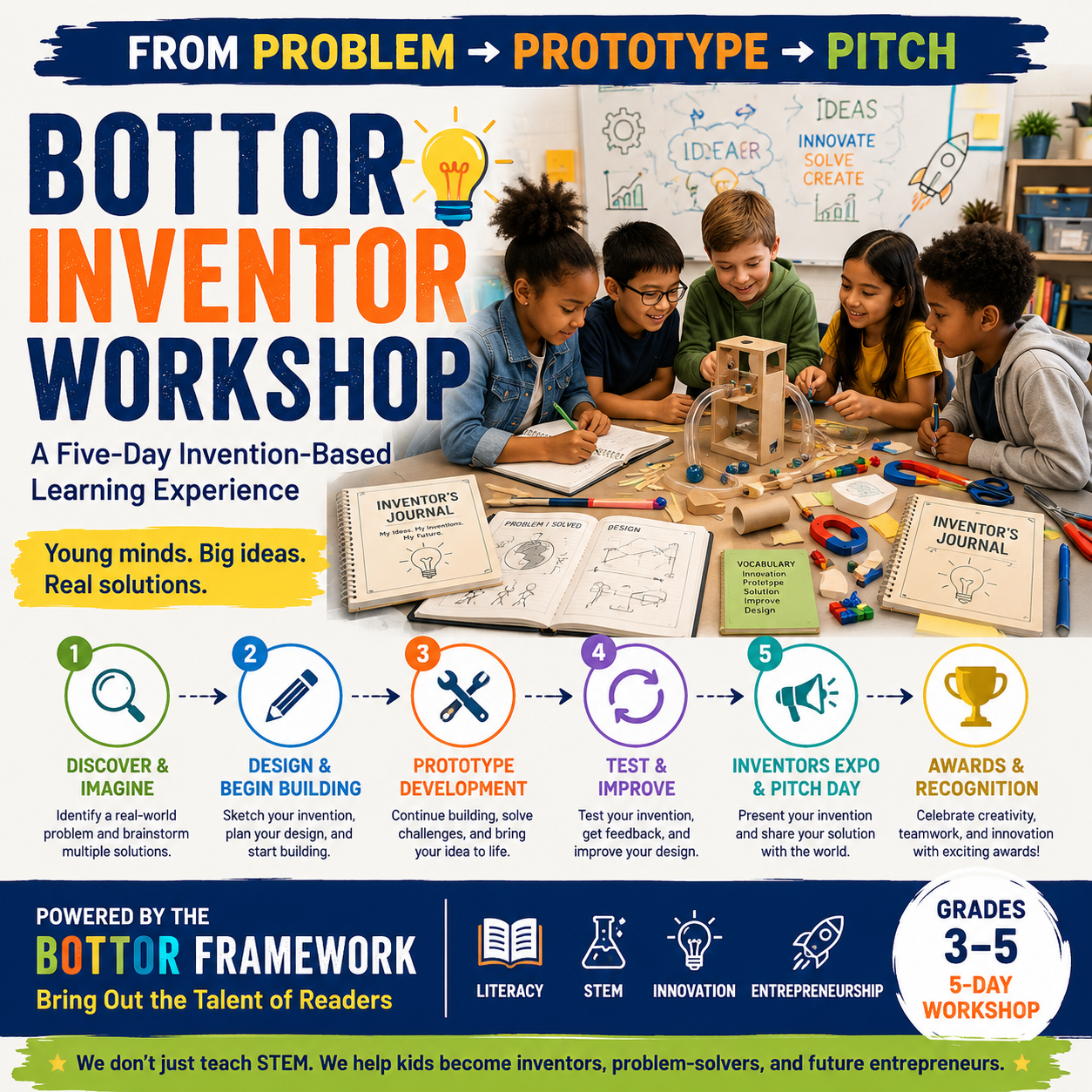
BOTTOR stands for Bring Out the Talent of Readers — the instructional methodology that powers every day of the workshop. It's built on five pillars:
The workshop's inventor mentor character guides students through the process, making each step playful and personal.
Six to eight invention-related words are read, discussed, and applied every day — then used correctly during the final pitch.
Every student holds a real role — Team Leader, Research Lead, Design Lead, Prototype Builder, Testing Lead, or Pitch Presenter.
Every prototype goes through multiple rounds of testing and revision before Pitch Day — iteration is the curriculum, not a detour from it.
Students build toward a public pitch all week, practicing how to explain and defend an idea to a real audience.
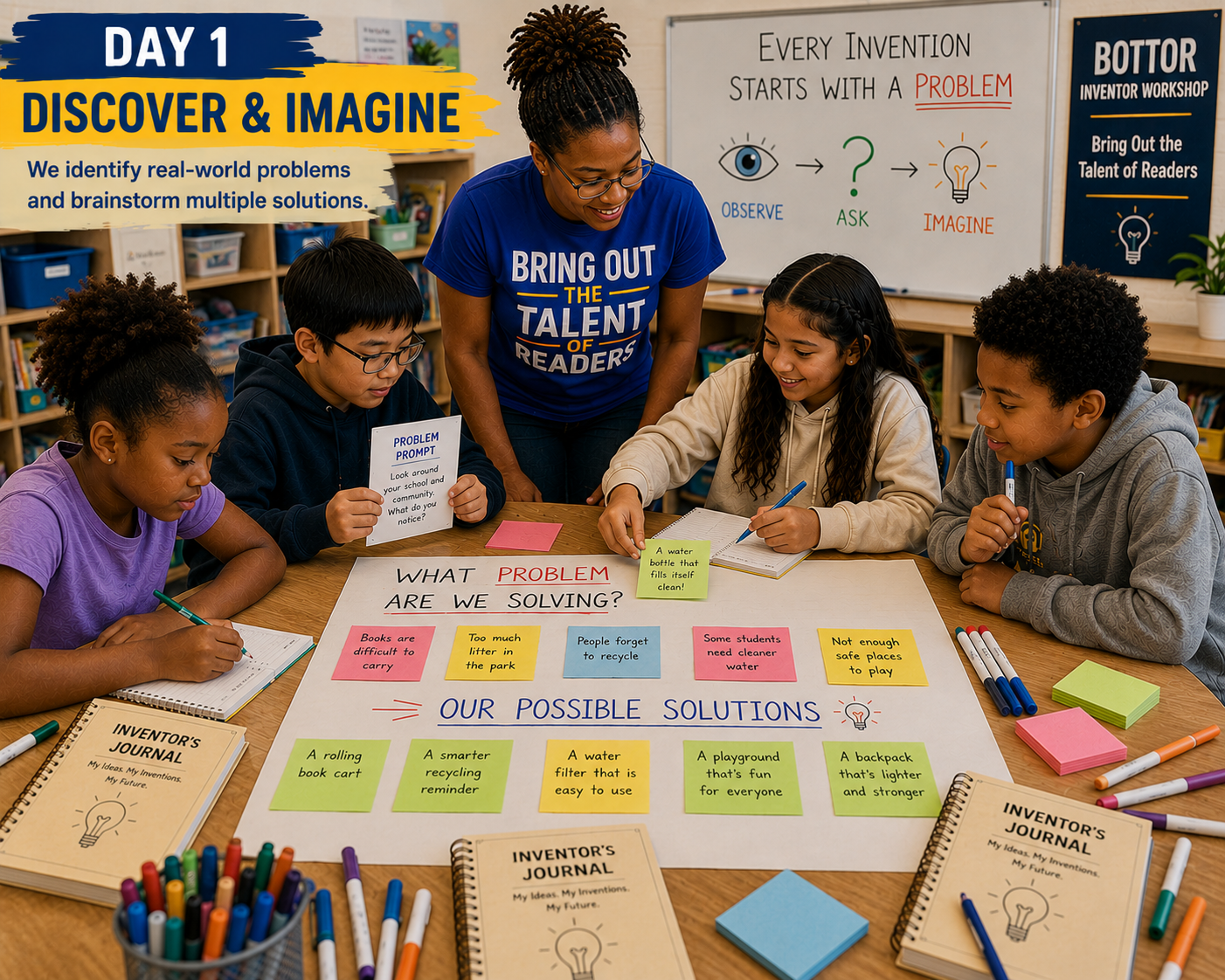
Students identify a real-world problem — observing challenges at home, school, or in their community — then brainstorm multiple possible solutions before choosing one to bring to life. This week's Innovation Vocabulary is also introduced on Day 1.
Learning outcomes: observation, critical thinking, reading, discussion, brainstorming.
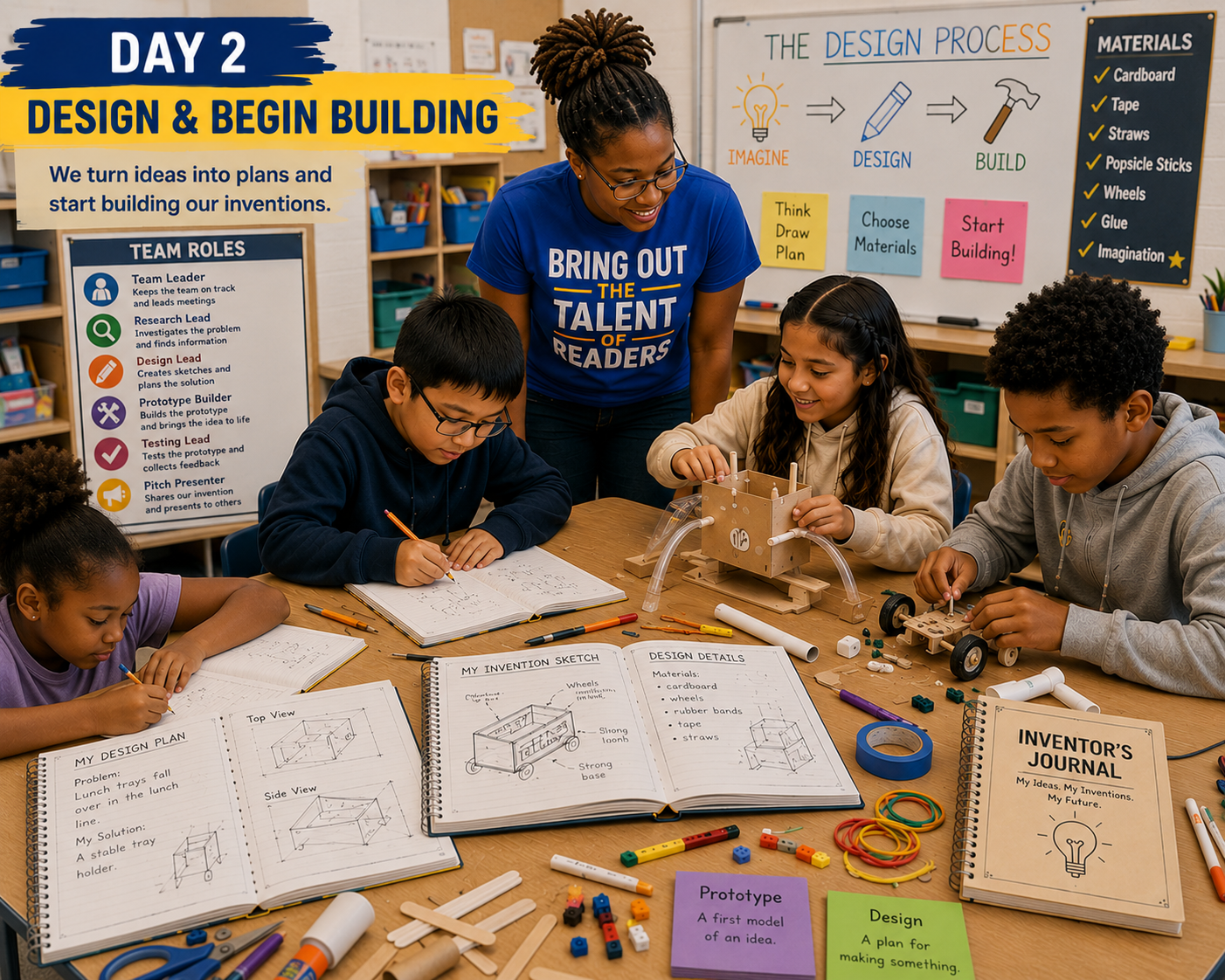
Students sketch their invention, label its important parts, and explain how it works — then begin building their prototype.
Learning outcomes: planning, engineering design, reading instructions, communication.
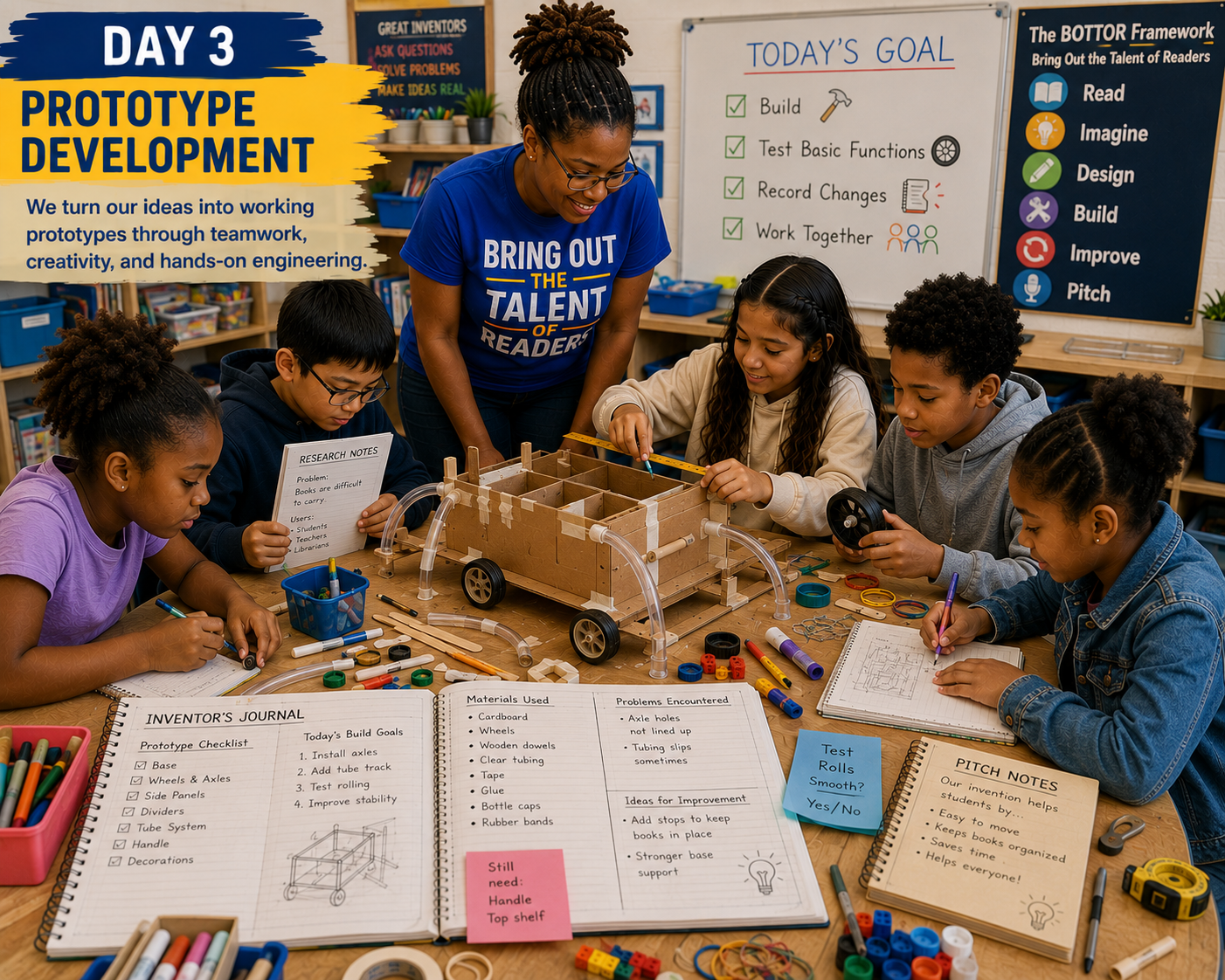
Students continue building their prototype using affordable, accessible materials — the emphasis is on learning the engineering design process, not building a finished commercial product.
Learning outcomes: trial and error, creative problem-solving, teamwork, iteration.
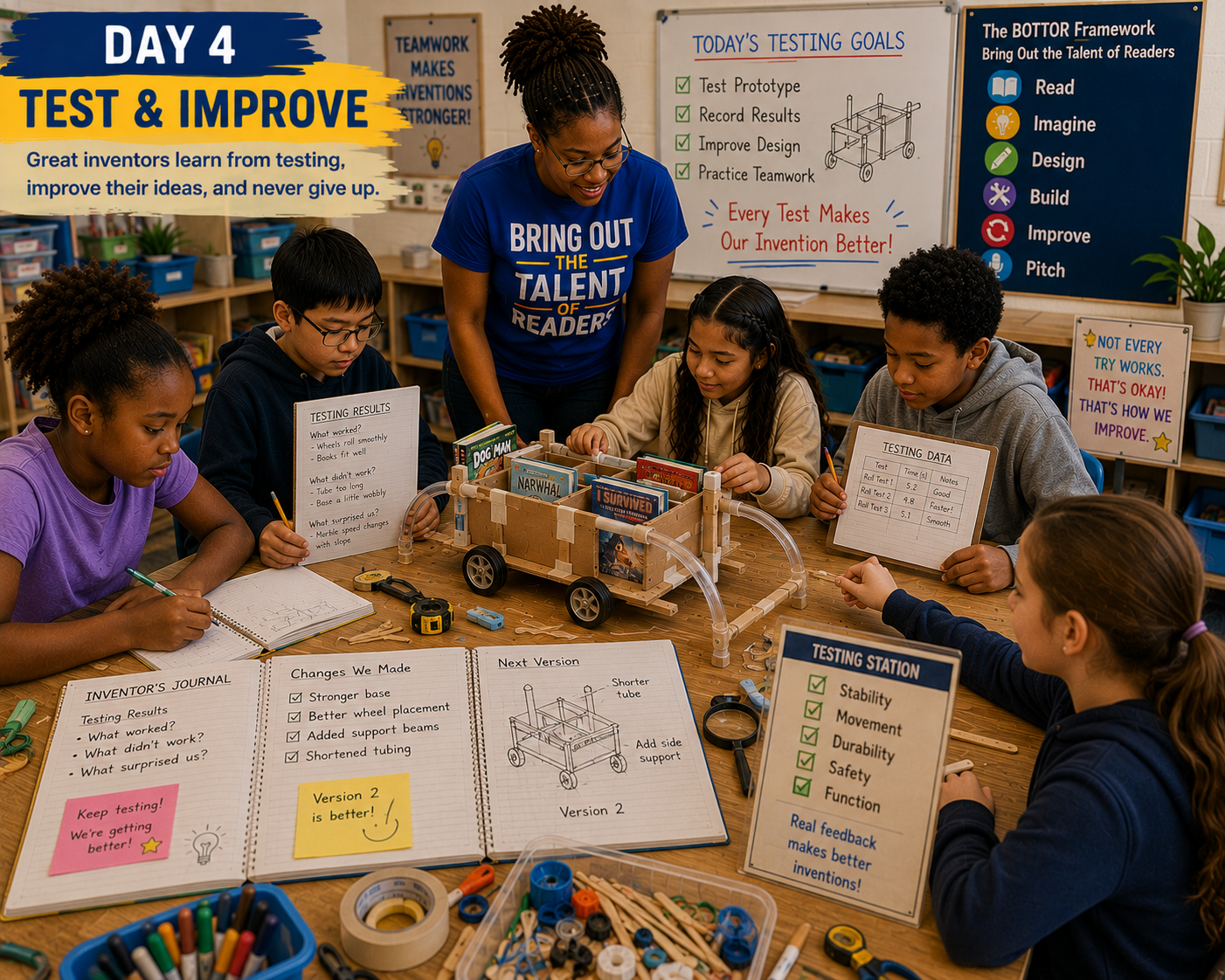
Students test their invention, gather feedback, identify improvements, and refine their prototype — then practice their final presentation. Every successful invention goes through multiple revisions before it succeeds, and Day 4 is where students learn that firsthand.
Learning outcomes: feedback and revision, resilience, presentation practice.
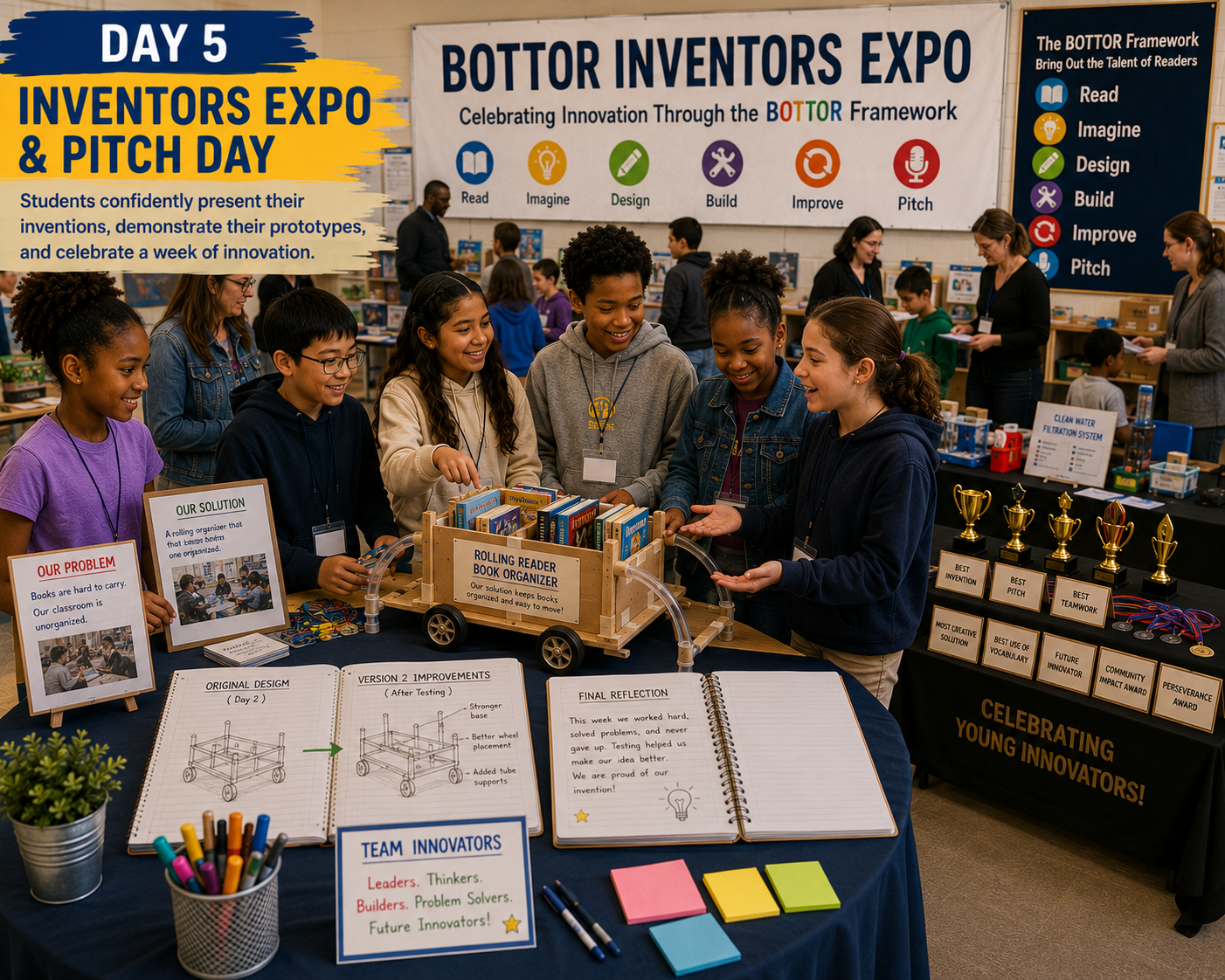
Students present their inventions before parents, teachers, community members, or judges. Each pitch explains the problem, their solution, who it helps, how it works, and why it matters — and every student must correctly use at least five of the week's Innovation Vocabulary words in context.
The day closes with an Innovation Showcase, where every team displays their prototype, Inventor's Journal, design sketch, problem statement, vocabulary words, and final pitch. Parents and guests walk around, ask questions, and interact with the students — much like a science fair or a startup demo day.
After identifying their problem on Day 1, each team assigns roles based on strengths — building real leadership, organization, and collaboration skills along the way.
Keeps the group organized and delegates tasks.
Researches the problem and existing solutions.
Creates sketches and helps plan the invention.
Leads construction of the prototype.
Oversees testing and records improvements.
Leads the final presentation — though everyone still participates.
Literacy is woven into every day of the workshop — not treated as a separate lesson. Each workshop includes an Innovation Vocabulary Challenge: students receive 6–8 vocabulary words related to innovation, engineering, entrepreneurship, or problem-solving, such as prototype, innovation, solution, design, engineer, improve, invent, and community.
Throughout the week, students read, discuss, and apply these words — and during Pitch Day, every student must correctly use at least five of them in context. This reinforces reading comprehension, vocabulary development, public speaking, understanding of STEM concepts, and confident communication.
The workshop is intentionally designed so prototypes can be built using affordable, accessible materials. The emphasis is on learning the engineering design process — not building a finished commercial product.
Every student receives a Bottor Inventor's Journal on the first day of the workshop and uses it throughout the entire five-day experience. Rather than simply building an invention, students document their journey from idea to final presentation — reinforcing reading comprehension, vocabulary retention, and the ability to apply new concepts.
The journal follows students through each stage of the workshop:
We want every student to leave feeling recognized for something they contributed. At the end of the program, students receive certificates, and recognition awards are presented.
Every student leaves the Bottor Inventor Workshop with their completed Inventor's Journal, prototype, invention sketch, project pitch, and a Certificate of Completion — along with greater confidence in reading, problem-solving, creativity, and public speaking.
The Bottor Inventor Workshop is modular — the curriculum stays the same, while the delivery format adapts to fit a family, school, or community partner. Bottor Inventor Workshops are hosted in partnership with schools, libraries, and community organizations throughout Wisconsin — the program travels to where students are, not the other way around.
A five-day summer or school-break cohort hosted directly by Bottor Learning Foundation, led by trained Bottor staff. Registration fee applies, with sponsored seats available thanks to donor support.
Delivered inside a partner school during the school day. Partner educators are trained on the curriculum by Bottor Learning Foundation and lead it themselves — free to the school.
Brought to a library or community center as a standalone program, with staff trained on the Bottor curriculum — free to the host organization.
The same five-day arc, spread across after-school sessions or weekends to fit a partner's schedule.